
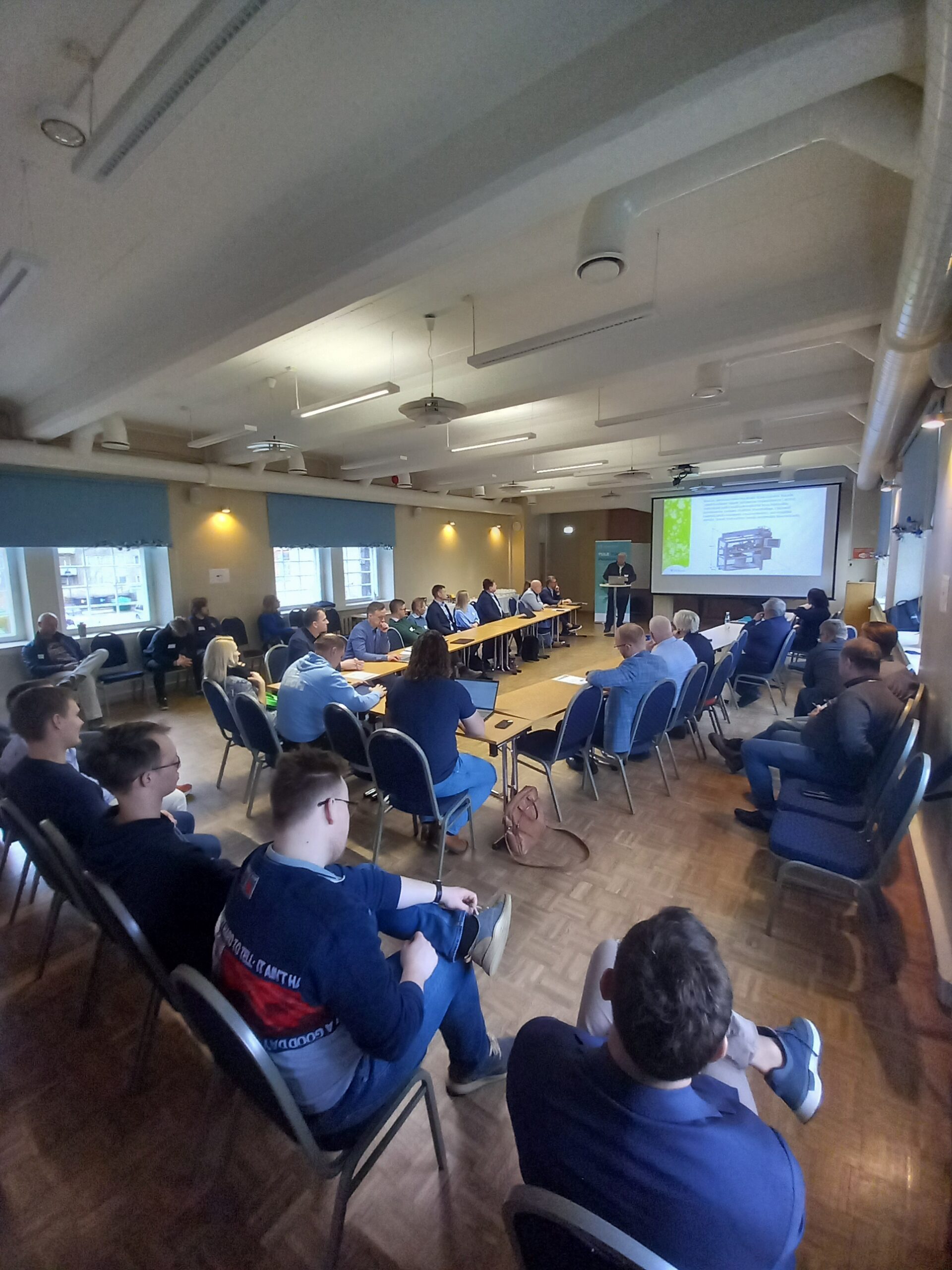
On March 17, 2026, a wind energy roundtable took place at Kuressaare Vocational School, bringing together representatives from the education and energy sectors to discuss workforce needs, training, and cooperation opportunities between vocational schools and companies.
Participants included students and staff from Kuressaare Vocational School, wind energy companies, representatives of the Estonian Wind Power Association (ETEA), teachers and students from Pärnumaa Vocational Education Centre, and a representative from the Ministry of Education and Research.
Key discussion points:
🔹 Education and learner trends
Over the past five years, vocational education has evolved significantly. Student motivation to pursue wind energy studies is driven by interest in technology, the uniqueness of the field, and its growing relevance.
🔹 Workforce outlook (OSKA overview)
An overview of the OSKA report highlighted the sector’s workforce needs over the next 14 years—even under a conservative development scenario. Discussions also covered student intake, dropout risks, and the importance of practical training.
🔹 Wind energy developments in Estonia
According to ETEA, offshore wind energy is not expected to be operational before 2033, although five projects are currently active. Development processes remain slow due to lengthy planning and environmental assessments, while neighboring countries are moving ahead with large-scale investments.
🔹 Cooperation between companies and schools
Companies value collaboration with vocational schools but emphasize the need for proactive engagement from schools in securing internships. The role of GWO certification and funding options for training were also discussed.
🔹 Ministry perspective and funding
The Ministry highlighted national priorities such as security, food security, engineering talent, and healthcare workforce. There is a clear need to modernize funding models, as technical education is resource-intensive. Opportunities for EU funding, private investment, and school-generated income were explored.
🔹 Workforce development and practical training
The wind energy sector is expected to grow steadily over the next decade. Companies noted that GWO certification improves safety and onboarding, but funding training for interns remains a challenge without guarantees of long-term employment.
🔹 Future education pathways
Plans were introduced for a unified engineering curriculum, allowing students to start with a common foundation before specializing—for example, as automotive mechanics or wind turbine technicians. Estonia is currently ahead of other Baltic countries in offering vocational-level wind energy education.
Following the roundtable, participants visited the safety training center in Upa, featuring facilities for GWO and IRATA training as well as composite materials workshops.
The discussion confirmed a shared commitment: developing a skilled local workforce is essential for the future of wind energy in Estonia.